



Single Origin Sheep
WORDS BY Cally Squires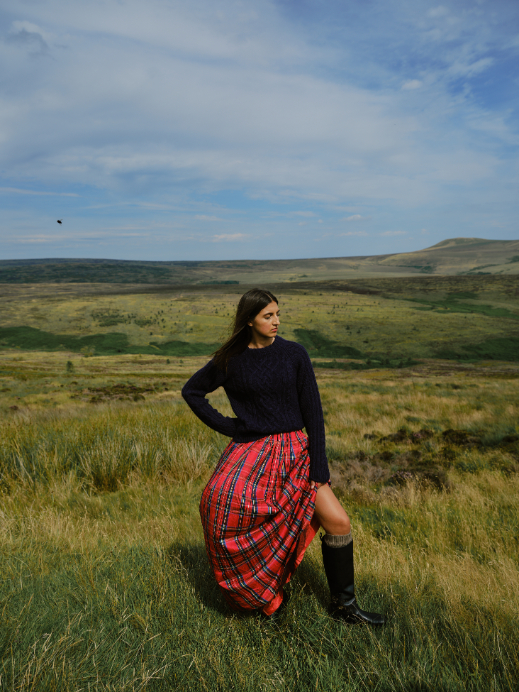
Cally Squires talks with Ruth Rands, Founder of Regenerative Fashion Brand HERD
“I fell in love with wool, with Bluefaced Leicester, with British farming and with this full connection”
Serendipitously located just off Sheep Street in the heart of Stow-on-the-Wold, is the newly opened HERD boutique, the knitwear brand's first standalone store. The sheep-ish location is extra poetic, given the area was historically known for wool farming.
“All the churches were built on the wealth of wool, because in the 1500s, Britain was almost exclusively a country of wool merchants; the reputation for British wool was global,” explains founder Ruth Rands.
Fast forward to 2020, and HERD began life after Ruth wrapped up her first business, which she began in 2012, making organic edible seaweed to help a friend recover from surgery.
“My motivation was to raise the profile of Atlantic-grown, very pure, wild-harvested seaweed, and we had a wonderful run supplying Selfridges, Ocado, Whole Foods and over 50 health food stores around the country,” explains Ruth.
That business model provided the template and inspiration for HERD, in terms of the supply chain and chemical-free processing. “A lot of the confidence that I had to create a product from raw material, came from my lessons with Atlantic Kitchen,” confirms Ruth.
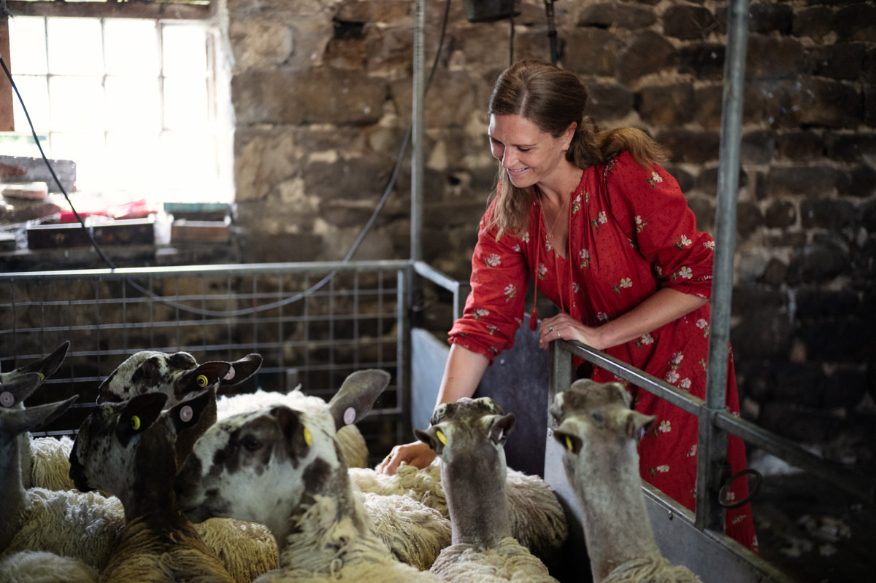
The approach applied to HERD was similarly mindful, with Rands visiting a friend's Lancashire estate and meeting as many local sheep farmers as she could. “It was all very personal and through that journey I fell in love with wool, with Bluefaced Leicester, with British farming and with this full connection. After I did the first collection, I took the jumpers to show the farmers what their sheep had made, and they were speechless.”
It became obvious to Rands early on that “there was something very special here, a story, a product and the impact that we could have with the people along the way.”
In particular a man in his eighties called Daryl Pilkington who, blindfolded “could put his hand on a fleece and tell you what breed it was and the micron count. This is the kind of knowledge that every farmer used to have.”
Skilled men like Daryl are sadly a dying breed, or were, until brands like HERD championed their work. “A lot of the towns that I work in had hundreds of mills in as recently as the 1980s, and now there's one or two left,” says Ruth.
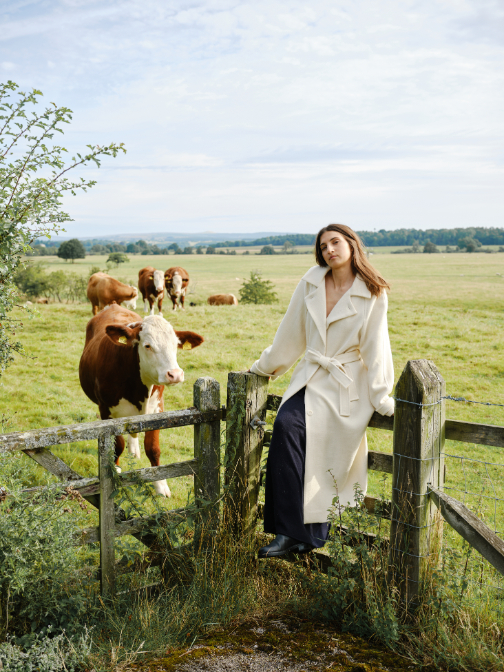
In a world of fast fashion, the process of making a Herd garment is refreshingly localised and traceable. “We buy the fleeces from the 40 different farmers [we work with] and then ship them to a central location in Yorkshire for grading (we only use the finest wool for our yarn). It's then scoured, dried, carded, combed, blended and spun in Yorkshire, so all within a mostly 20-mile radius, which is amazing, although we say 150 miles to incorporate the farms in Northumberland.”
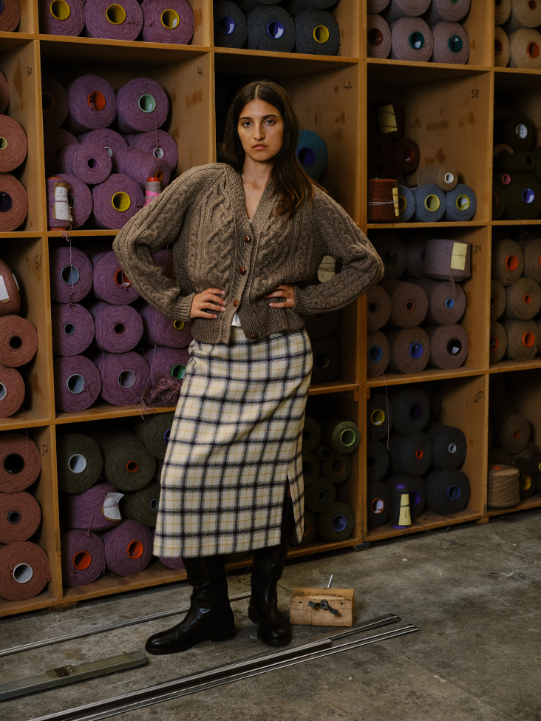
Customers visiting the new store might be equally amazed by the depth and vibrancy of colours achieved using sustainable plant dyes. “Wool is actually very happy to be dyed, it is very absorbable as a fibre. You just have to be very careful because it can be subject to felting, so we developed a process using antiquated hank dyeing machines, which only exist in one factory in the country.”
And bringing everything full circle, the brand's buttons are made from nuts by a manufacturer in the Cotswolds called Courtney, who is the last button maker in England.
And so it was that in the summer of '26, the new kid, or more accurately, lamb, on the block arrived in Stow after a successful Burford pop-up, a residency which showed Ruth that “we already had customers in the area who loved being able to come in and feel the wool, get the sizing right, meet me and really delve deeper into understanding the brand. Especially with British wool sometimes having a reputation for being scratchy or coarse, not like our wool which is so silky and delicious.”
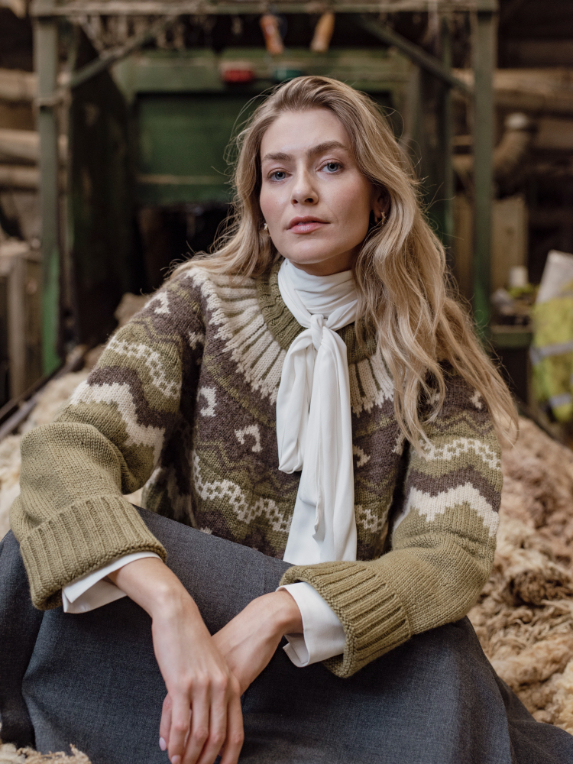
The brand is also stocked at Thyme in Southrop, which gives Rands a perfect excuse to visit one of her Cotswold favourites, the hotel's incredible Ox Barn restaurant. A longtime Gloucestershire resident herself, she is also full of praise for local hotspots everywhere from Estelle Manor to The Bull in Charlbury and Chloe's Pilates at Old Coal Drop Yards.
Dropping soon in Stow will be the Autumn/Winter 2026 collection, which will lean into the brand's Scottish connection, supporting the last surviving mill in Langholm called Drove Weavers. “I went up to visit and was entranced by the landscape, the steep hills and the drama of the heather,” recalls Ruth. So, expect a modern take on argyle, oversized triangle scarf, the brand's first overcoat and perhaps even a first foray into menswear.
As the nights begin to draw in, the boutique will also host knitting classes with a local shepherdess, starting in September. Plus, a botanical workshop to mark the launch of the brand's lanolin candles. “There's a very active knitting community here called Close Knit, so we'll be launching a hand knit vest pattern in November too,” shares Ruth.
“Knitting has always been a huge part of my life as an adult. Partly because it's incredibly calming and good for your mental health, but also because it allowed me to have a deeper connection with the material, and I think there's something a little bit rebellious about making your own clothes.”
So, if you can't knit them, join them.
Herdwear.co · HERD, 3 Church Street, Stow-on-the-Wold
SHARE: