



Walk: Dover's Hill to Chipping Campden
WORDS BY Michael Spenley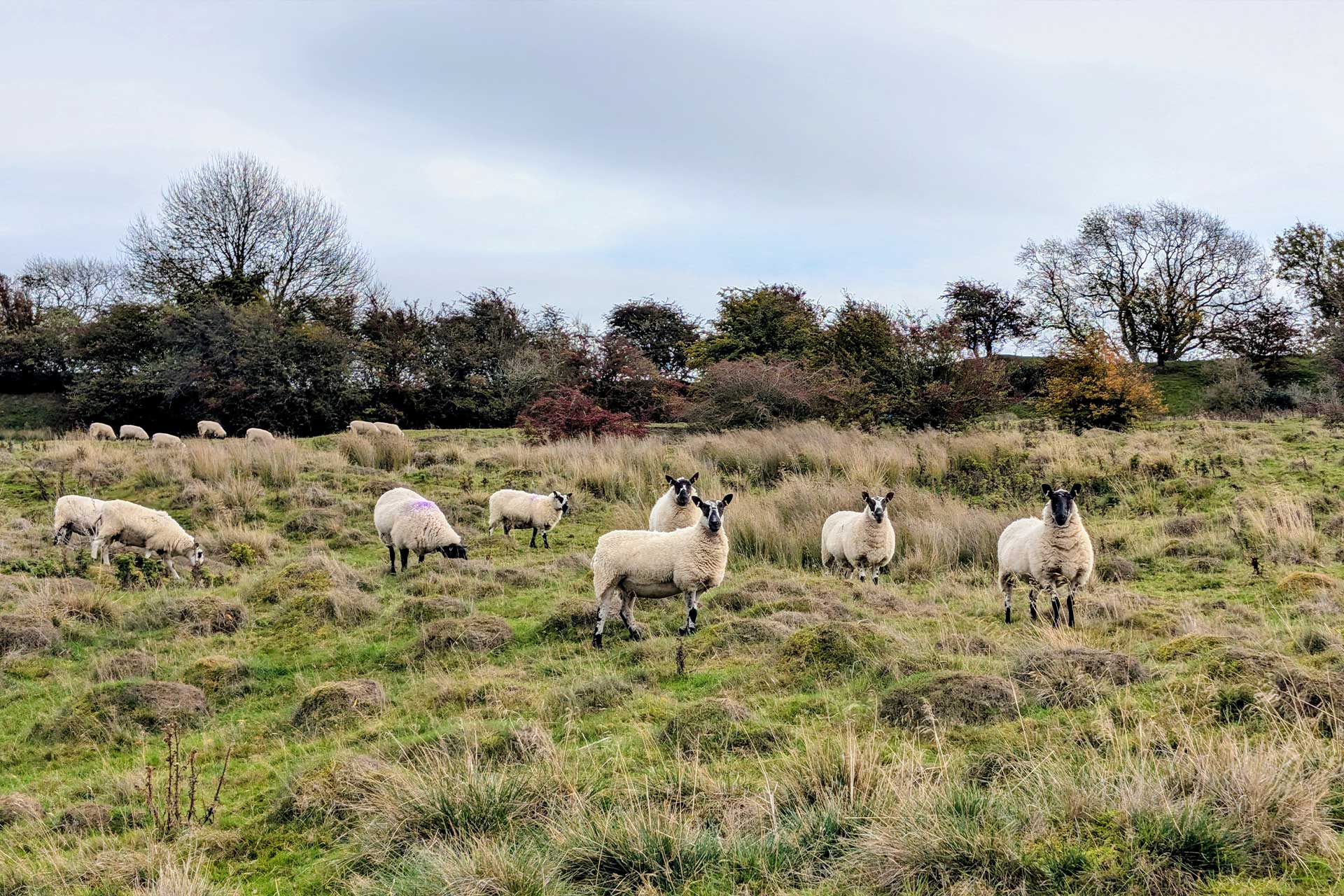
A moderate, adaptable route taking 2 to 4½ hours with spectacular panoramic views across the Vale of Evesham to the Malvern Hills.
My 10-year old son and I took the Dover's Hill walk on a blustery Sunday in November. Practicalities first, there are quite a number of walks to choose from around Chipping Campden. Each is accessible for walkers of most abilities, and you can select a circular route of between 2 and 4½ hours, depending on how much time (and gusto) you have.
We recommend starting from and returning to Chipping Campden High Street because if you park at the National Trust car park at the top of Dover's Hill itself, there are no facilities at all and, depending on the time of year, the weather blows in quickly off the escarpment. We were extremely glad of the warm welcome and traditional open fire at The Volunteer Inn pub on our return. The pub is at the lower end of the High Street and as such was less crowded with visitors, easier to park, and a great place to begin and end a walk.
The route starts with an amble through the outskirts of Chipping Campden but soon opens onto rolling fields.
As you head on from Orchard Cottage along Hoo Lane you start to leave the village behind and are soon navigating through sheep as you head up the hill. Our arrival sent skylarks soaring from the recently harvested land to the sky, their voices trilling away in rolling scales, a reminder of summer as they swooped and dipped. The incline is manageable, but it is an incline, nevertheless. We stopped for a breather or two on the way up and enjoyed the views back to Chipping Campden, nestled in its own valley, set-aside from everything else and, gloriously, not really on the way to anywhere. Despite its huge popularity, from this vantage point the village looks almost lost amid the folds in the Cotswold hills.
Residents of Chipping Campden are extremely proud of and loyal to their home, perhaps encouraged by a sense of living in a place that, geographically at least, can feel like a secret gem.
We caught sight of a string of walkers scattered up along the ridge in the distance with an emptiness ahead of them and knew we were on the right path. The hilltop itself is spectacular – even eliciting a "wow" from my 10-year-old son, perhaps not surprising given the dramatic panorama across the Vale of Evesham and Avon River to the Malvern Hills. It's a beautiful, big-sky view. This is verdant, fertile land – the lower slopes and terraces are said to have housed Roman villas and vineyards, and it's easy to imagine them here. There is also a fine antique toposcope from which you can navigate points of interest.
The undulating Cotswolds fields rolling away from the ridge provide a natural stadium that has been used for generations by locals as the site of the Cotswolds Olympick Games. Robert Dover started the Games at or around 1612. He was a pal of the poet Ben Johnson who called him "my jovial good friend". In a detail from 1636, he can be seen wearing a fine hat, feather, ruff and coat bestowed on him by King James I – a political statement as well as one of fashion. A clear alliance with royalty showed a preference away from the rising puritanism of the day.
A wooden castle was built here each year and cannons fired from its battlements to start the events. There were field sports with horses and greyhounds, sack races, tumbling and dancing as well as games of chance and skill. Those of a more violent nature including fencing with swords and cudgels, quarterstaff, and shin-kicking (which is, for the avoidance of doubt, exactly what it says on the tin!). These competitors were separated by sticklers, an umpire or referee who used sticks. The term "stickler to the rules" is thought to originate from this time.
It is said that the games attracted tens of thousands of spectators and was the largest sporting event in England. You can almost feel the drama, spectacle and majesty. A modern version of the Games is still held here around Whitsun, with a torchlight procession back down to the village after dark.
For those wishing to extend the route slightly, it's well worth adding a detour through The Lynches Wood; a beautiful stretch of crisp woodland below the hill, where fine bluebells appear each May and the autumn colours glow beneath the peaceful canopy. A gentle flight of steps leads onto a lovely looping path that reconnects with the main trail, making it an especially fine addition throughout any season. The Lynches, named after the man-made ridges or terraces known as lynchets, are enchanting in their own way, but it is the shifting light, fresh air and far-reaching views that truly make this place special.
Once approaching the far end of the escarpment and having taken in the beauty of Dover's Hill, with its sweeping vistas over the Vale and the surrounding Cotswold countryside, we then took an easy stroll back down the hill to the town using the well-rutted start of the Cotswold Way. After the walk, a well-earned drink at The Volunteer Inn felt especially rewarding, the perfect way to linger over the day's memories as we played a few leisurely games of dominoes. I hope you get to enjoy it as much as we did.
SHARE: